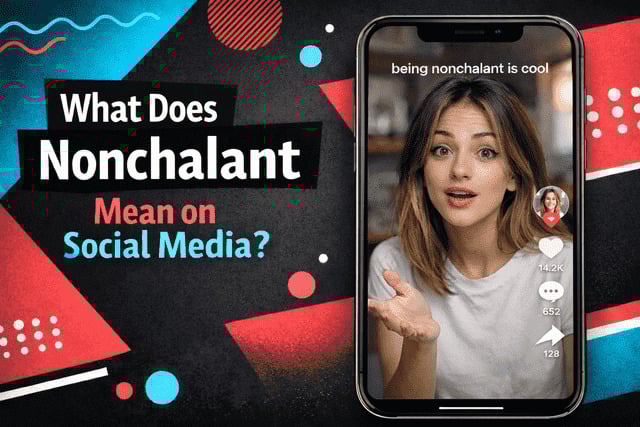
Scrolling through TikTok, Instagram, or X, you have probably seen someone described as calm, unbothered, or emotionally low effort. That relaxed, almost detached energy is often summed up with one word: nonchalant. As the phrase keeps trending across captions and comment sections, more users are asking what does nonchalant mean on social media? and how this attitude became such a defining part of digital culture. Online, the term is used to describe people who appear cool, composed, and intentionally unfazed by attention, drama, or reactions. But in the age of carefully curated personalities, being nonchalant has become more than a word. It has become a social media persona.
Meaning of Nonchalant in Slang
At its core, the nonchalant meaning comes from French roots and refers to appearing calm or unconcerned. The meaning of nonchalant in everyday English describes someone who stays relaxed even when most people would react emotionally. According to the traditional nonchalant definition, it is about showing casual indifference without stress or excitement.
The nonchalant meaning in English has stayed consistent over time, but online culture reshaped how it feels in practice. On social platforms, the term shifted into nonchalant slang, often used to describe people who appear effortlessly cool, emotionally distant, or intentionally low energy. This nonchalant slang meaning is not always about true indifference. Many times, it is a performance.
Nonchalant on social media often signals someone who avoids reacting strongly, keeps captions short, or replies with minimal effort. That nonchalant attitude online creates the impression of confidence and control. A carefully curated nonchalant tone on social media can make someone appear mysterious, self-assured, or emotionally unavailable.
This style is especially common on TikTok, where creators actively explore what does nonchalant mean on TikTok through skits, POV videos, and ironic captions that highlight emotional restraint. As the nonchalant meaning TikTok evolved, it became tied to trends where appearing unbothered is the entire point.
Some creators even lean into the nonchalant aesthetic, pairing blank expressions with relaxed outfits and muted music to reinforce the vibe.
Examples of Nonchalant in Captions, Comments, and Texts
Understanding how to use nonchalant online becomes much easier when you see real examples of it in action. The idea is not to look cold or rude, but relaxed, emotionally controlled, and low effort in a way that feels intentional. Here is how that shows up across different types of content.
Nonchalant captions often sound casual and understated, even when the post itself gets a lot of attention:
- “Just posting and logging off.”
- “Didn’t overthink it.”
- “Same energy, different day.”
- “It happened, anyway.”
In comment sections, nonchalant comments usually avoid strong emotion or long explanations:
- Replying with “lol” or “ok” to something dramatic.
- Dropping a single emoji instead of a full response.
- Liking a comment without replying at all.
Text messages and DMs show nonchalant behavior examples through minimal reactions:
- Short replies like “yeah,” “maybe,” or “sure.”
- Delayed responses without apology.
- Reading a message and responding later as if nothing happened.
A simple nonchalant used in a sentence might look like this: “They went viral overnight but acted like it was no big deal.” That line reflects how nonchalance is less about what happens and more about how someone reacts.
Some creators maintain a nonchalant online presence while also focusing on boosting followers on TikTok.
Why “Nonchalant” Became a Trend on TikTok and Instagram
The rise of nonchalant behavior online connects deeply to performance culture. Acting relaxed while being watched is a form of social currency. Many creators intentionally practice acting nonchalant to avoid appearing desperate or overly emotional. Appearing nonchalant online often signals confidence, especially in spaces where attention feels competitive.
This has shaped how people view a nonchalant personality online. It is often associated with self-control, emotional maturity, or subtle confidence. When people compare nonchalant vs indifferent, the difference matters.
Nonchalant suggests awareness without emotional display, while indifference implies not caring at all. Similarly, nonchalant vs apathetic shows that apathy feels empty, while nonchalance still feels intentional.
Creators use nonchalance to avoid overexposure. In a feed full of loud trends, calmness stands out. Instagram also played a role by rewarding minimalism. Clean visuals, relaxed expressions, and short captions made the style easier to adopt.
When Calling Someone Nonchalant Is a Compliment or an Insult
Whether the label lands positively depends on context. Some people wonder is nonchalant good or bad because the answer shifts depending on tone and intent. In many cases, is being nonchalant attractive is a common question because emotional restraint can feel confident and appealing.
However, why people act nonchalant online is not always positive. Some use it as emotional armor. Others perform it to hide insecurity.
When someone asks what does it mean when someone is nonchalant, they might be trying to understand emotional availability rather than personality.
Nonchalance becomes an insult when it dismisses feelings or avoids accountability. It becomes a compliment when it reflects calm confidence under pressure. This is why tone and situation matter more than the word itself.
Some creators balance this carefully by mixing relaxed content with intentional growth, sometimes referencing how to boost TikTok likes without breaking the effortless image they want to project.
What’s the Difference Between Nonchalant vs Unbothered
While these terms overlap, they are not identical. The phrase chill attitude slang often applies to both, but the nuance matters. The unbothered meaning suggests emotional immunity, while the carefree attitude meaning focuses on freedom from worry.
Nonchalant behavior overlaps with indifferent slang, but it does not fully detach emotionally. Instead, it aligns more closely with low effort energy slang, where minimal reaction is part of the appeal. Nonchalance is intentional restraint, not emotional absence.
This difference explains why people admire it. Being calm without seeming cold is a delicate balance that many try to master online.Behind a nonchalant online presence, many creators still look for ways to boost TikTok views without drawing attention to the effort.
Final Verdict
So, what does nonchalant mean on social media? It describes a digital attitude built on emotional restraint, calm presentation, and intentional understatement. It can signal confidence, detachment, or quiet self-assurance depending on context.
Used thoughtfully, nonchalance adds depth to online expression. Used poorly, it can feel dismissive. Understanding the difference helps you read online behavior more accurately and decide how you want to present yourself.
FAQs
Is being nonchalant a bad thing on social media?
Not necessarily. It can signal confidence and emotional control, but it becomes negative if it dismisses others or avoids accountability.
Why do people like the nonchalant aesthetic online?
It feels effortless, confident, and emotionally controlled, which stands out in highly expressive digital spaces.
Is nonchalant the same as being cold?
No. Nonchalant suggests calm restraint, while cold implies emotional distance or lack of empathy.
Can nonchalant behavior be intentional?
Yes. Many creators consciously adopt it to shape perception and avoid appearing overly emotional or reactive.
Is nonchalant popular on TikTok right now?
Yes. TikTok trends often reward understated reactions, relaxed captions, and calm delivery, making nonchalance highly visible.